Requirements first
Every engagement begins by describing the process the software must support, the people who use it and the systems it must exchange data with.
Information technology company
FOREST CHAPEL HIVES LIMITED designs, builds and maintains custom software systems. Work covers application development, web platforms, cloud infrastructure, integration between existing systems, workflow automation, testing and long-term technical support — delivered with documented scope, reviewed code and repeatable deployment.

Overview
The company works with organisations that depend on software for daily operations and need it built, connected or kept running reliably.
Every engagement begins by describing the process the software must support, the people who use it and the systems it must exchange data with.
Version control, peer review, automated tests and reproducible builds are part of ordinary delivery rather than optional extras.
Systems are handed over with deployment procedures, configuration notes and monitoring in place so they can be run without guesswork.
Core service areas
Individual engagements usually combine several of these areas within one delivery plan.
Applications built around a specific operational process instead of a generic product template.
Browser-based systems with role-based access, structured data entry and reporting.
Environment design, infrastructure as code, deployment pipelines and observability.
Data exchange between systems and removal of manual steps from routine workflows.

Custom software development
Custom development is appropriate when off-the-shelf tools force awkward workarounds, or when a process is central enough that its software should reflect it precisely.
Web application development
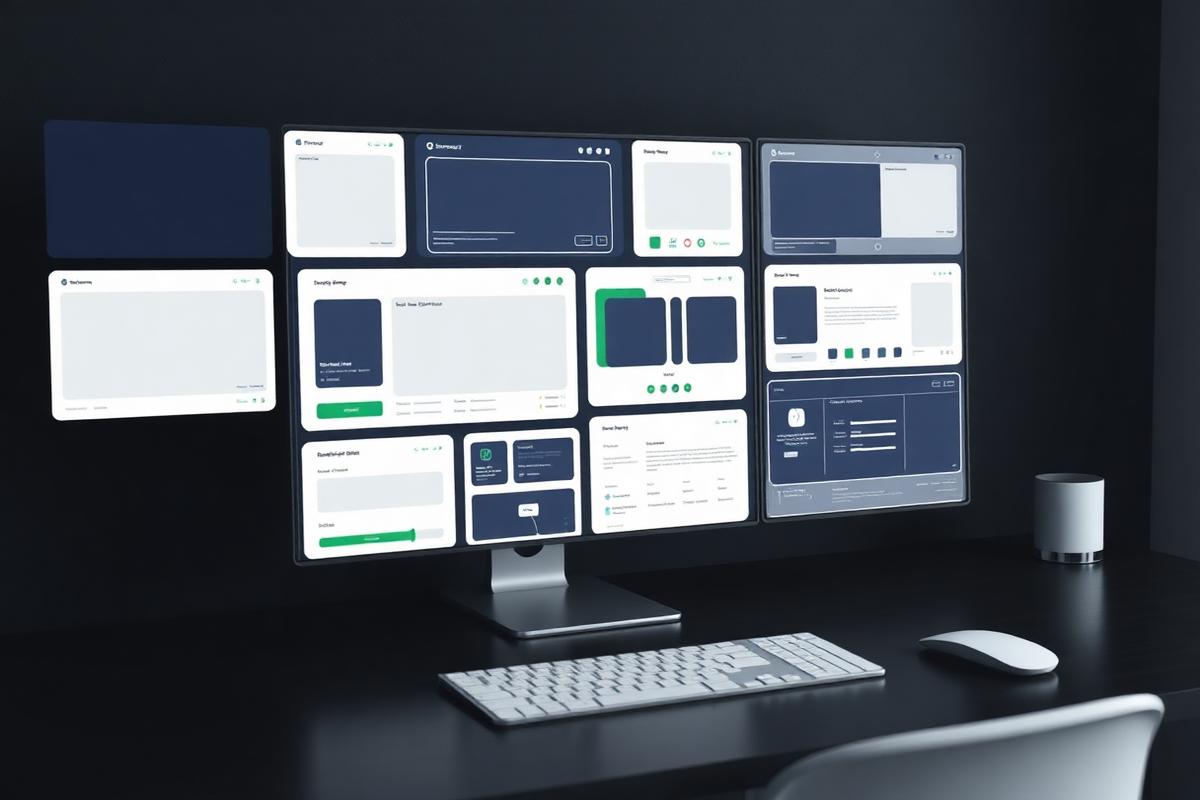
Web applications are built as accessible, responsive interfaces backed by documented APIs, so the same data can later serve reporting tools or mobile clients.

Cloud and infrastructure
Infrastructure is described in code so that development, staging and production environments stay comparable and changes are reviewable.
Network layout, service sizing, storage and backup arrangements documented before provisioning.
Build, test and deployment automated so releases follow the same path each time.
Metrics, logs and alerts covering availability, error rates and resource usage.
Resource choices reviewed against actual usage rather than left at initial defaults.
Integration and automation
Integration work makes existing applications exchange data reliably; automation replaces recurring manual handling with defined, observable jobs.

Security and reliability
Security and resilience considerations are handled during design and implementation, and revisited whenever a system changes.
Authentication, least-privilege roles and separation between application and administrative access.
Encryption in transit, encryption at rest where supported, and secrets held outside source control.
Regular dependency review and patching, with known-vulnerability scanning in the pipeline.
Backup schedules, restore rehearsals and documented recovery steps for critical components.
Development process
The same sequence is followed on new builds and on work applied to existing systems, adjusted in depth rather than in structure.
01
Workshops and interviews to record objectives, users, constraints and existing systems, producing a written scope and a prioritised backlog.
02
Data models, service boundaries, integration points and hosting topology are documented before implementation begins.
03
Work is delivered in short iterations with code review, version control and a demonstrable increment at the end of each cycle.
04
Automated and exploratory testing run against each build, with defects tracked to resolution before release candidates are cut.
05
Deployment through repeatable pipelines with staged environments, migration scripts, rollback paths and release notes.
06
Monitoring, dependency updates, incident handling and incremental improvement once the system is in daily use.
Discovery → Architecture → Implementation → Verification → Release → Maintenance
Quality assurance
Test coverage is planned alongside features so regressions are found by the pipeline rather than by users.

Collaboration
Progress, risks and open decisions are recorded in shared tools so status does not depend on individual recollection.
Requirements, tasks and defects tracked in one place with clear priority order.
Working increments shown at the end of each iteration so feedback arrives early.
Architectural and scope decisions summarised in writing with their reasons.
A named technical contact on each side to prevent instructions being lost between channels.
Maintenance and support
Operating systems, runtimes, browsers and third-party APIs change continuously. Maintenance work absorbs those changes before they reach users.
Investigation and correction of defects reported in production, with root cause recorded.
Dependency and platform updates, database maintenance and cleanup of accumulated technical debt.
Small enhancements and configuration changes as processes and regulations change.
FAQ
Contact information
Enquiries about services, project requirements or general company information can be sent by email.